The formerly enslaved artisans who constructed First African Baptist Church in Beaufort, South Carolina, sometime after the Civil War didn’t use nails. Metal was expensive and often hard to come by for Black builders less than a generation from bondage.
The Rev. Alexander McBride, First African’s senior pastor, explained how the laborers built the church in Gothic Revival style, noted for its signature pointed arches and windows. The current building replaced an antebellum praise house, an open one-room clapboard space with little furniture so the enslaved could engage in a more mobile, joyful service removed from white surveillance and sit-quiet worship styles.
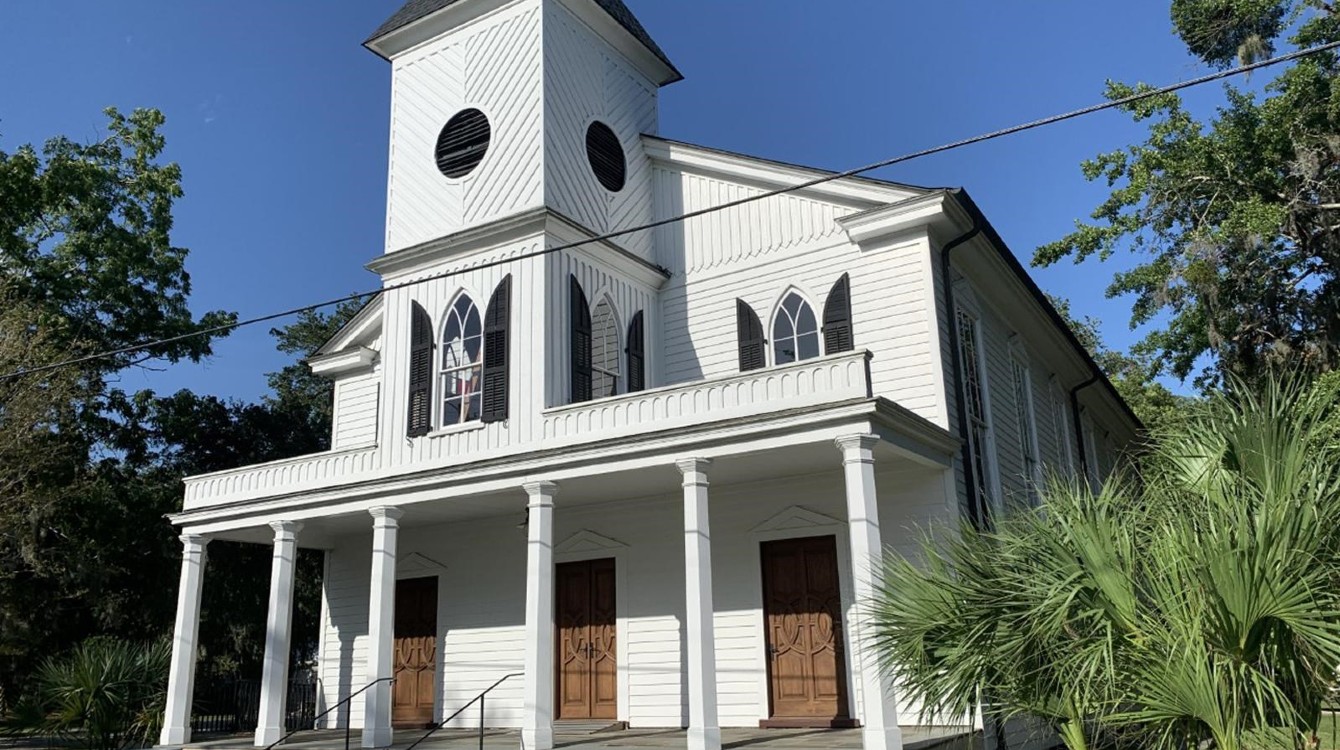
“They used the mortise-and-tenon method, where they interlock the wood. And this church has withstood every hurricane” that has rolled through the coastal city, said McBride, the 16th pastor at First African in its more than 150 years of existence.
And there have been many storms. An 1893 hurricane drowned many of the town’s Black residents, stranded in low-lying areas or swept to their deaths. But even that massive storm didn’t cause significant damage to the church, thanks to the unnamed craftsmen who may have lacked nails but had possessed the skill and wisdom to use the strongest joint known to woodworkers.
The church’s biggest current enemies are time, termites (which have eaten their way through some of the structure’s undercarriage) and moisture — largely unavoidable menaces for a century-old building in a humid seaside town.
Earlier this year, First African was among dozens of historically Black churches to win grants from the National Trust for Historic Preservation’s African American Cultural Heritage Action Fund. Those monies, through the Preserving Black Churches initiative — $4 million in this funding cycle — will support projects that recast their sites’ history through new interpretation or exhibits, grow capacity through staff hires and community outreach, and repair aging or damaged buildings.
Diversity of spaces
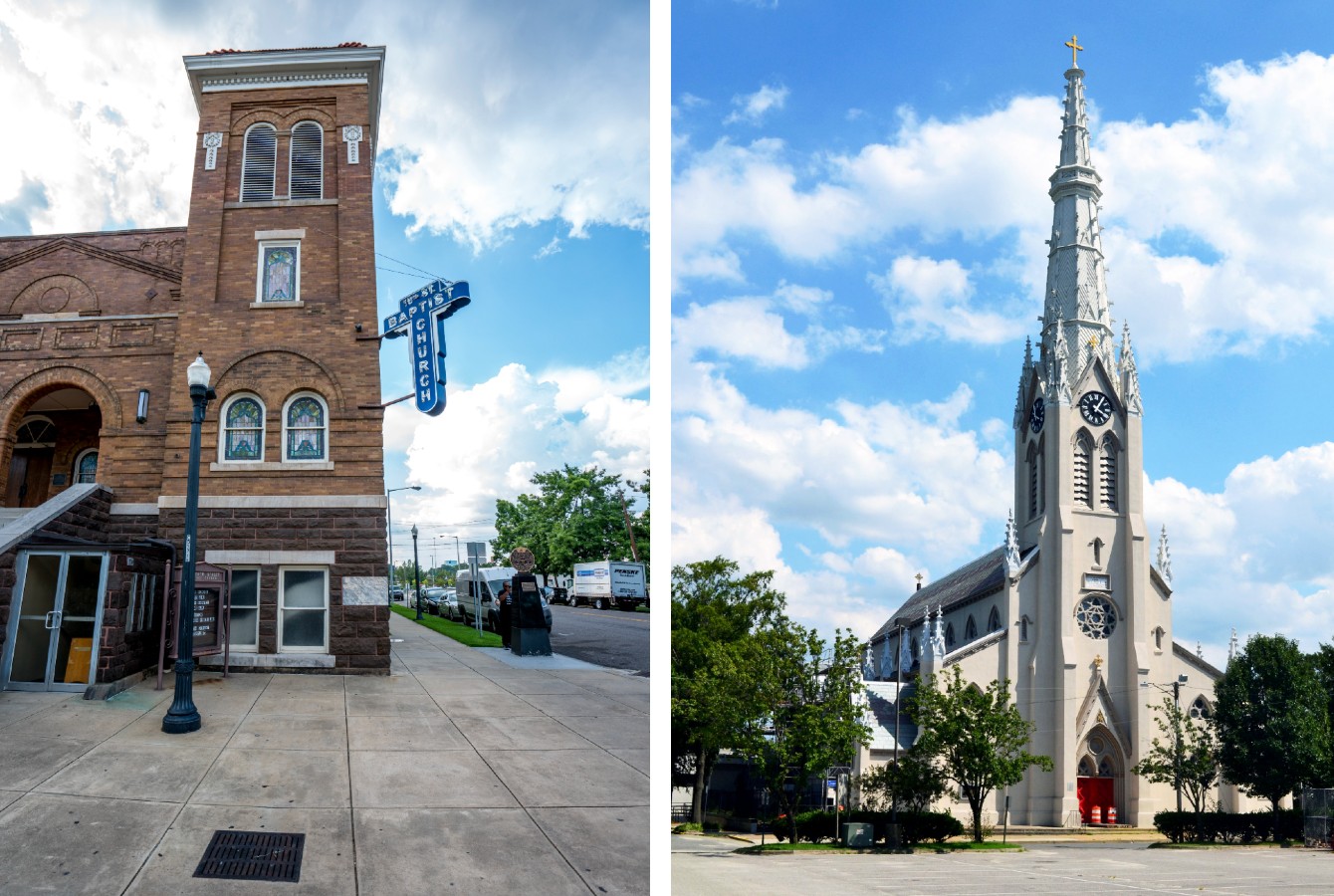
The grantees highlight the diversity of Black worship spaces and the history of how Black Americans have fought for religious freedom and built their own institutions amid racism and violence. They include institutions such as 16th Street Baptist Church in Birmingham, which just marked 60 years since the Ku Klux Klan bombing that killed four girls and damaged the church; the elegant Black-majority Basilica of St. Mary of the Immaculate Conception in Norfolk, Virginia; one-room churches built by hand and heart; and churches in places with historically small Black populations, such as Alaska and West Virginia.
“Black churches are living testaments to the achievements and resiliency of generations in the face of a racialized, inequitable society,” said Tiffany Tolbert, the Action Fund’s senior director for preservation. “They’re foundational to our Black religious, political, economic and social life.”
In some places, a church is the only building that remains as an artifact of a Black community that no longer exists. Scotland AME Zion Church in Potomac, Maryland, not far from the nation’s capital, is one such example from a community swallowed by encroaching development and urban sprawl.
Religion scholar C. Eric Lincoln once described the Black church as the unchallenged “cultural womb of the Black community.” Fellowship halls and sanctuaries in Black churches have long functioned as multipurpose rooms, where worship and politics meet. Churches like Beaufort’s First African have been incubators for Black social enterprise; during Reconstruction, First African was the site of a school for freed people, hungry for the literacy denied them during slavery.
Numerous historically Black colleges, civil rights protests and social movements trace their origins to Black pulpits and pews. Preserving church spaces can thus have a multiplying effect, documenting as well the stories of Black communities at large and the work of Black architects, artisans and mutual aid.
Worthy of preservation
It’s commonly said that the church is “more than the building,” yet buildings are material remnants of history and culture. What kinds of meaning do church buildings have for you?

That’s the case with the Halltown Memorial Chapel, built in 1901 not far from Harpers Ferry, West Virginia, where abolitionist John Brown and his band of brigands in 1859 had raided an arsenal in hopes of ending slavery. The one-room chapel is small, only about 40 feet by 50 feet, with room for 13 pews. It was built of rubble stone by church members, stone masons and laborers who also constructed a nearby turnpike or worked at the local paper mill, which has since closed. Services continued there for decades, only ceasing after World War II because of a dwindling congregation. After that, it hosted the occasional gathering until its last event — a wedding of one of the founders’ descendants — in 1988.
Kim Lowry, the treasurer of the Halltown Chapel Memorial Association, cataloged the many repairs needed via email. “Water damage from a hole in the roof and from water seeping in under the foundation was the culprit. And without regular events or services, the chapel suffered from neglect. The plaster walls needed to be rehabilitated, the flooring had rotted and deteriorated and required replacement, and exterior work was required on the wood window sills and frames and the Chapel entrance area.”
Powderpost beetles had chomped on the pews, spreading ruin with every bite. One of the church’s three stained-glass windows was missing altogether, and the others needed restoration. One is a poignant tribute to Edna, a church member’s child who had died in infancy. Such design features — with references to congregation members who fundraised for such elements — are tangible history, traces of people long gone and their efforts to build beloved community.
“It’s impossible to talk about American craftsmanship without talking about the Black and Indigenous hands that constructed it even before 1776,” said Brandon Bibby, a senior preservation architect with the Action Fund. “It’s important to preserve that aspect so that we as a society don’t forget. By preserving, we are saying, ‘This place matters in the whole context of the American landscape.’”
“What I want most is that through this project, Black congregations and communities will see the value and beauty in their places and see they are worthy of preservation,” he said.
Does your church have a historic role in your community? How has its role changed over the years?

Recognizable elements of church design can be particularly vulnerable to deterioration. Steeples are both symbolic and pragmatic communicators; their towering presence in a landscape announces where people can worship or seek shelter. Yet sitting aloft, largely inaccessible, placing strain on dramatic, heaven-pointed roofs and often channeling rainwater to places it shouldn’t go, steeples can be a source of problems that go unnoticed until a leak sprouts or cracks appear.
Many of the Preserving Black Churches grant recipients need steeple repair. When congregations are forced to choose among costly repairs, a steeple can sometimes take a back seat to high-traffic areas with more visible problems, such as the sanctuary itself.
Funding a range of needs
What traditional elements of your church are difficult to maintain? Would your congregation be OK without them?
Declining church attendance has meant less coin in the collection plate and, in turn, fewer resources for maintenance and repairs. Black American church membership has dropped in recent years, from 78% in 1998-2000 to 59% in 2018-2020, though Black Americans remain one of the top populations most likely to be church members (along with conservatives and Republicans), according to a multiyear Gallup poll released in 2021.
A 2012 Kellogg Foundation report also found that Black people give more of their income to community-based causes than whites, in part because of a culture of mutual aid, lack of access to white-dominated institutional funding and traditions such as tithing. Even so, when an evangelical research firm surveyed church financial well-being, more Black pastors said their congregations had less than seven weeks of cash reserves — perhaps because they are dependent on a community with lower wealth in the first place. Getting money to repair churches can be particularly difficult.
Following the first grants that went to 35 churches across the country, recipients of another $4 million will be announced in January, Tolbert said, as part of a plan to distribute between $8 and $10 million, with support from Lilly Endowment Inc. In total, $20 million will be invested through Preserving Black Churches across all of its program goals.
If you were asked what in your church is worth preserving, what would you say? What would your congregation say?
That funding will go not only toward capital needs, Tolbert said, but also toward planning, to help churches understand how to undertake preservation. Matching grants will help churches create new preservation endowments so that invested income can be used to support maintenance and preservation of existing buildings. Emergency grants are also available to address immediate issues such as damage caused by floods, fires and even acts of vandalism.
And the Action Fund is working with six churches — four in Alabama and one each in California and Chicago — to help develop comprehensive stewardship plans that will address restoration and rehabilitation of the buildings along with programming and interpretation, activating space for community, and bringing in arts and social justice programs. They will benefit from a consulting team of architects, engineers, business planners and capital campaign fundraisers.
“It is essential that these places are activated,” Tolbert said. “They are centers of worship, but also, they continue to serve the community.”
Action Fund executive director Brent Leggs told The Washington Post in an interview that Black churches are exceptional lenses through which to view Black and American history. “It’s amazing to see centuries of Black history told at historic Black churches. Some of the stories include formerly enslaved Africans moving through emancipation, beginning to form communities, … and some of the earliest buildings founded by African Americans in the United States [include] a Black church. These places are of exceptional significance. Their stories matter, and they are worthy of being preserved.”
Would members of your community benefit from learning more about your congregation’s past and its role in local history?
Questions to consider
- It’s commonly said that the church is “more than the building,” yet buildings are material remnants of history and culture. What kinds of meaning do church buildings have for you?
- Does your church have a historic role in your community? How has its role changed over the years?
- Steeples are a traditional element of many churches, yet they can be difficult to maintain. What traditional elements of your church are difficult to maintain? Would your congregation be OK without them?
- If you were asked what in your church is worth preserving, what would you say? What would your congregation say?
- How is your space “activated” for your community? Would members of your community benefit from learning more about your congregation’s past and its role in local history?
It’s an overcast October day, but despite the autumnal pall and the chill in the air, a line of visitors files through a fenced-in plot of raised beds at Elijah’s Farm near Durham, North Carolina. One by one, they shovel dark, rich soil into the beds where a farmer will soon plant another season’s flowers and microgreens.
Just minutes earlier, the Rev. A.W. Shields had exhorted a crowd of about 40 people to make their hands instruments of growth and transformation.
“We don’t just talk about liberation,” she’d said. Instead, liberation is an embodied practice that requires doing collectively and individually. To the sound of West African drums, Shields reminded attendees that freedom means putting hands, back, mind and heart into the quest for a better world.
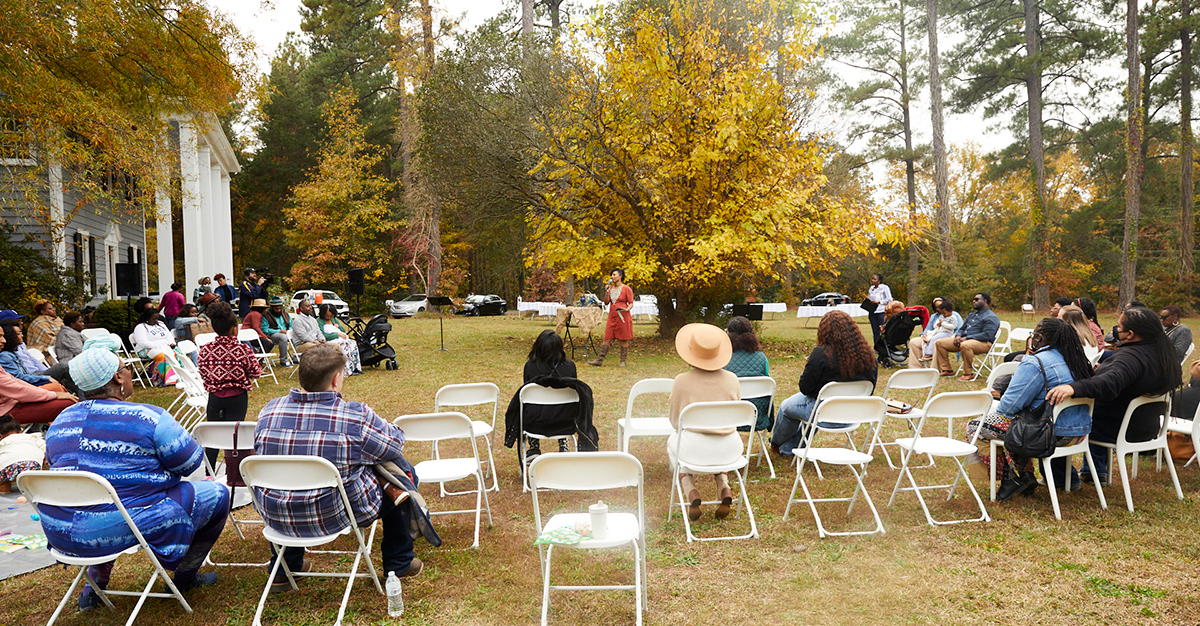
Versions of that message recur throughout this gathering of The Root Church, an intentional community that Shields and partners have created. The “farm service” was only the second formal service for the church, which strives to provide a worship space for Black people, especially Black women, LGBTQ people, and those who want their faith to walk in step with their politics.
The Root Church is an outgrowth of Root Cause Collective, an organization composed of clergy, counselors, social workers, and health experts who offer physical, mental, and organizational health and wellness services.
How does your congregation embody its most important commitments?
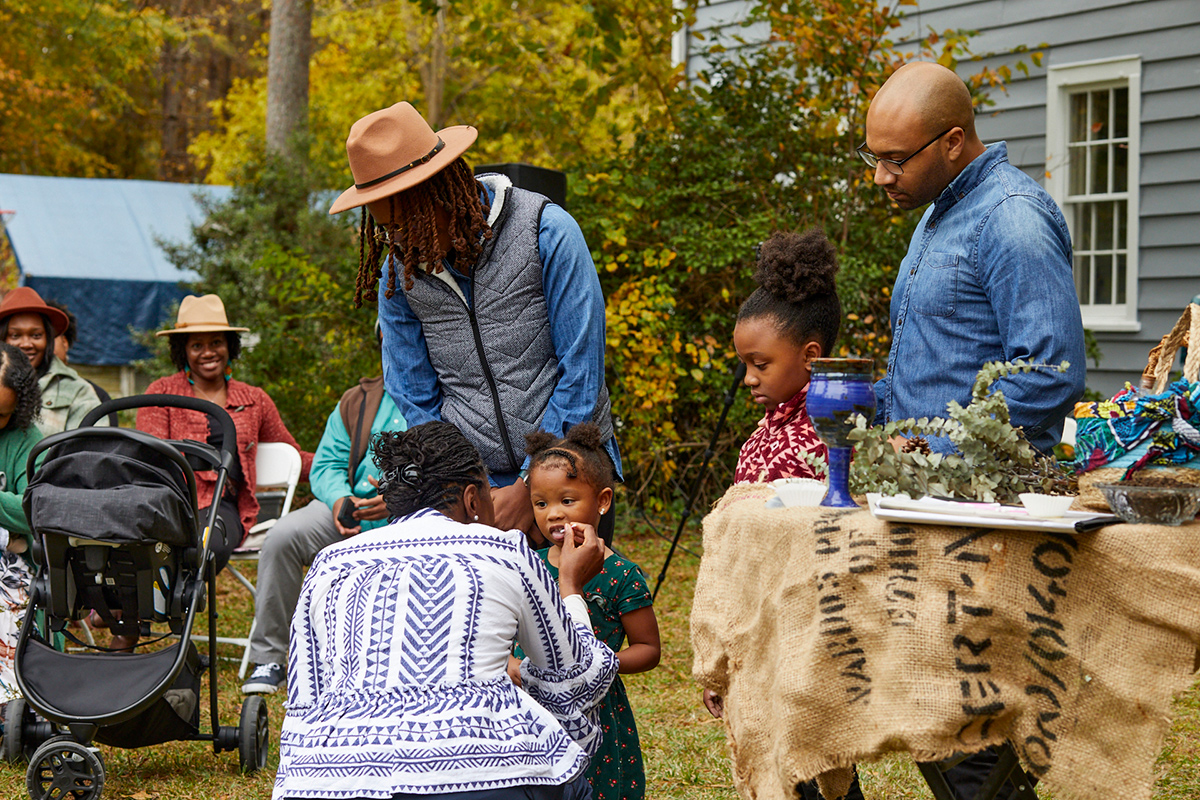
The collective began after Shields and other women convened to study the story of Deborah, a military strategist, prophet and judge whose reach has long been debated because she likely did not have authority over the men of her time. Deborah’s story resonated with Shields and her collaborators, mostly high-achieving Black women who experienced loneliness and isolation in churches and professional settings.
Shields formed “trauma-informed spiritual support groups for Black women and queer folks impacted by gender-based, race-based and religious trauma.”
The groups found their time so meaningful that they wanted to continue in spiritual formation together which eventually led to the church gatherings like the one at Elijah’s Farm.
In Deborah’s story of power within patriarchal restraint, of fighting ceaselessly for her people but getting little credit for important victories, “we really read her as a Black woman,” Shields said.
The collective and the fledgling congregation are both volunteer run, and in addition to the congregation, the collective has founded a nonprofit wellness center which provides free to low cost mental health and wellness services.
Who in your community is gathering those who are excluded, overlooked and marginalized? Who is trusted to do that holy work?
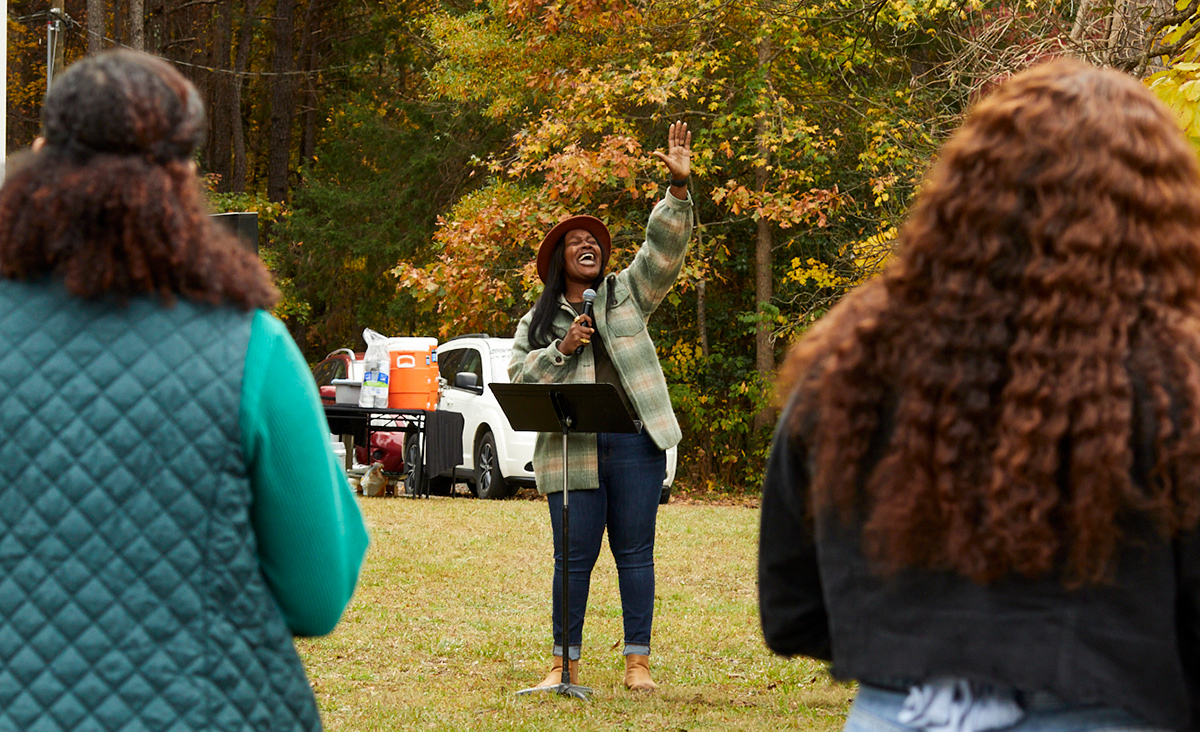
Shields, a graduate of Union Theological Seminary and Columbia’s divinity program, also has a master’s in social work. Before becoming executive director of the collective, she created one of the nation’s first denominationwide mental health programs at the National Benevolent Association, a ministry of the Christian Church (Disciples of Christ).
During her work in church organizations, she couldn’t help but see — and couldn’t “unsee” — the ways in which religious institutions have either actively harmed people, both inside and outside their congregations, or otherwise not lived up to their missions of spiritual and material care. Shields is a tried-and-true devotee (and former student) of the late James H. Cone, the Black liberation theologian who challenged white supremacist Christianity that justified slavery and segregation, criticized Black churches that depoliticized worship, and recognized Black Christianity’s radical potential.
In her career as a social worker, Shields understood that people damaged by churches that dehumanize queer people or expect women to fill the pews but not the pulpit might still seek relief in the church. They have been socialized to want or need a spiritual connection but may be wary about reentering a sanctuary.
So Root Cause Collective morphed into the barely year-old church, which might be best described as an experiment in exploring Black womanism, liberation theology and community building.
The vocabulary and structure of The Root Church defy the conventional. Attendees aren’t “members.” Services may be called “sacred moments.” Participants may read texts such as James Cone’s “Black Theology and Black Power”or Katie Cannon’s “Black Womanist Ethics.”
There is no denominational wing financing a capital campaign to build a brick-and-mortar presence, and rather than serving as a senior pastor from whom all direction flows, Shields pastors with a handful of “community chaplains,” all Black women.
According to Pew Research Center data collected in 2019 and 2020, 7 in 10 Black Christians in the U.S. say that combating sexism is key to their faith, and an overwhelming majority of Black Americans (85%) believe that women should be in senior leadership positions in churches. But only 28% of the Black congregants surveyed said they’d heard sermons opposing sexism from the pulpit in the last year.
And while almost two-thirds of Black Americans polled said that homosexuality should be accepted in society, a significant number of Black adults (51%) balked at their clergy officiating same-sex unions.
What Biblical passages resonate with your experience and empower you to act?
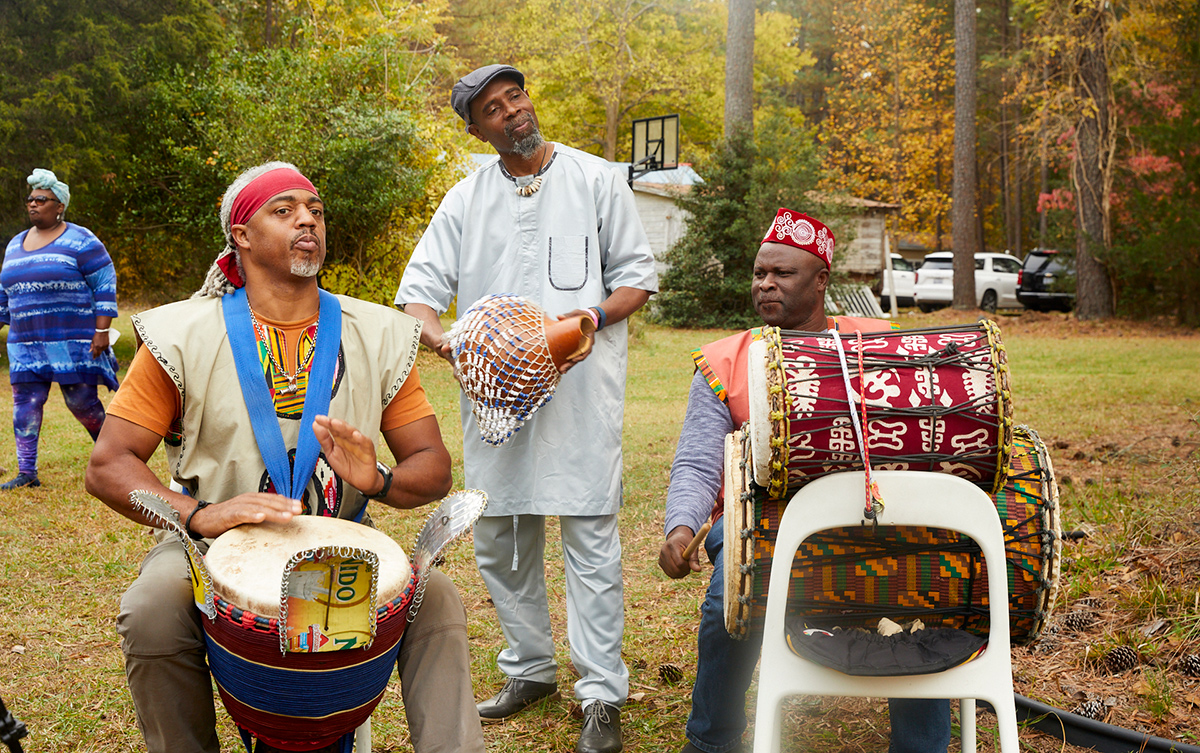
That doesn’t make for a warm reception for those who identify as Black, queer and believers. And should Black worshippers attend predominantly white or multicultural churches, the disconnect may be different but still quite uncomfortable.
The Rev. Chalice Overy, one of the community chaplains who work with Shields, has seen the disconnection in real time. She began her ordination journey as a 17-year-old preaching in eastern North Carolina and has since occupied positions at both historically Black and predominantly white Baptist churches. During a previous stint at a Black church, she’d meet people and tell them where she pastored but hesitate to invite them to services.
“I didn’t think it was the safe place for them, because they were queer or somehow unorthodox in their beliefs. So I didn’t invite people, because I didn’t want them to have to lay down a part of their identity at the door,” she said.
But at the same time, she felt that Black queer Christians would feel out of place at progressive white churches as well.
“At a white church, Black members or would-be visitors would say, ‘Let me know when YOU preach, but the worship services are so white,’” she said.
“So in one place they might have to lay down part of their identity, their sexual orientation or their gender identity, or [in another place] they may have to lay down certain aspects of their culture,” Overy said. “For about four and a half years now, I’ve just been like, ‘Oh man, we need something else. We need something more.’”
The collective is now inching toward that “something more” by convening like-minded people for events such as the farm service. The Root Church has served about 100 people, linked through an email list and a web of personal connections. Shields had quietly attended a church where Overy pastored for about six months. Amber Burgin-Brothers, the creator of Elijah’s Farm, is also ordained and knew Shields through local divinity school circles.
As part of the October plein-air service, attendees gathered at Elijah’s Farm. Situated on former plantation land, the farm, a community agricultural ministry, is not far from Durham’s well-preserved Stagville state historic site — a once-sprawling antebellum plantation that housed more than 900 enslaved people.
Shields called the service a modern-day “hush harbor,” recalling the secret outdoor worship spots where enslaved people would assemble outside the fearful gaze of enslavers and define their own relationship to God.
For Overy, part and parcel of that project is making room for African-descended practices in the lives of worshippers and the theological canon.
“We have accepted the hermeneutic of a very small group of people, white men from Germany, primarily. And we’re saying that whiteness and oppressive models have convinced us that those are the only opinions that are valid when it comes to God. But I know God. My people knew God. My grandmother, my grandfather knew God. What did they have to say about who God was?”
Who in your community is silenced or excluded by conflicting commitments? Who notices and includes those who are left out?
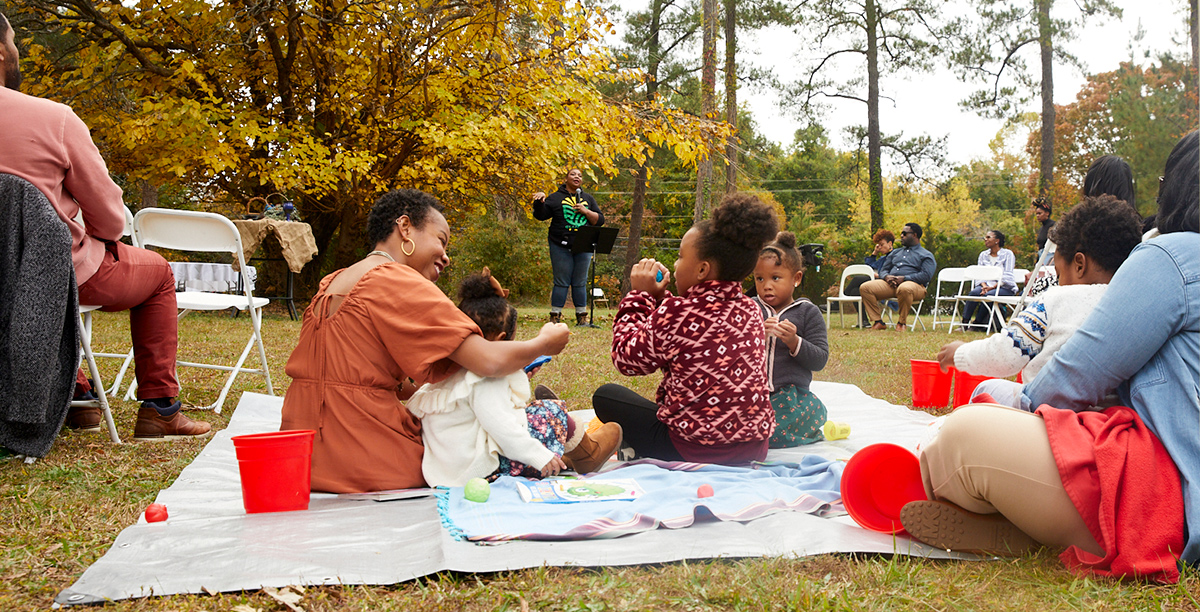
During the farm service, Burgin-Brothers gave her testimony of trying to ignore God’s call to become a farmer. She quipped, smiling, that there was never a call she didn’t try to ignore first. Knowing laughs reverberated around the yard, as children toddled under the watchful eyes of adults, toting mini-buckets of play tools. And a key component of the farm service was a blessing of children conducted by Wake Forest University professor Melanie Harris. An invitation to the blessing had been extended to all families, but particularly those whose families are often excluded from traditional church settings.
None of the invited queer families came to the blessing, but Shields took that in stride.
“I can’t promise that it’s a safe space,” she said, because safety is relative and she knows well the wounds that churches can leave. But she promised that “safer” is a goal of the utmost importance and that The Root Church, whatever it becomes, wants to listen and learn how not to duplicate the sins of the mainstream church.
How can you create “safer” conditions that invite people to test the welcome you offer?
Later, after participants were invited to roam the property and commune with the soil, a liturgical dancer sketched wide arcs with her legs and arms to the tune of Beyonce’s “Bigger,” whose chorus echoed The Root Church’s focus on growing together:
I’ll be the roots, you be the tree
Pass on the fruit that was given to me
Legacy, ah, we’re part of something way bigger.
Questions to consider
- How does your congregation embody its most important commitments?
- Who in your community is gathering those who are excluded, overlooked and marginalized? Who is trusted to do that holy work?
- What Biblical passages resonate with your experience and empower you to act?
- Who in your community is silenced or excluded by conflicting commitments? Who notices and includes those who are left out?
- How can you create “safer” conditions that invite people to test the welcome you offer?
The Rev. Sean Palmer savors the pageantry and performances of Easter almost as fervently as he loves recounting the story of a certain carpenter-turned-itinerant preacher from Nazareth.
In South Carolina, where Palmer grew up, his family color-coordinated their Easter outfits. One year, they were decked out in teal; the next year, in pastel linen. But the highlight of the resurrection celebration was the Easter speech program at Lexington, South Carolina’s New Bethel AME Church, founded more than a century and a half ago.
Palmer, now the pastor of Chestnut Street Presbyterian Church and director of the University of North Carolina Wilmington’s Upperman African American Cultural Center, knew that every Easter without fail he would mount the dais and recite something.
At first, it was a few lines with an obligatory Jesus mention. As he grew older, these performances became lengthier poems and disquisitions, which he wrote himself, about “the reason for the season,” he said.
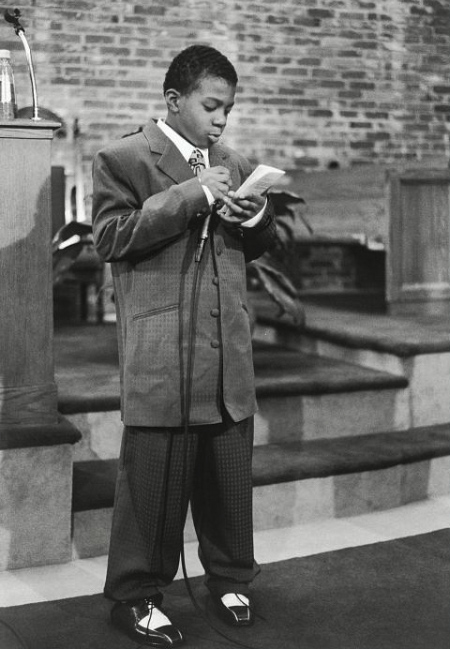
The Easter speech has historically been an institution within an institution, coaching children in Black oratorical traditions. Earl H. Brooks, an assistant professor at the University of Maryland, Baltimore County, researches African American expressive culture and sound studies.
He said the Easter speech is one link in “the robust tradition of African American rhetoric, including speeches, toasts [and other forms]. Recognizing the power of language is fundamental to the Black experience in America and across the diaspora.
Tradition and training ground
“In the most current form, that could be the celebration of hip-hop and rap. But before hip-hop and rap, we’ve valued jokes, sermons,” he said. “They’re all part of valuing Black rhetorical sophistication and brilliance,” a tradition studied by scholars from Henry Louis Gates to Geneva Smitherman.
Black celebrities have called it a training ground. Oprah Winfrey said that her first Easter speech, at a Kosciusko, Mississippi, Baptist church at age 3 ½, launched her media career.
In the essay “Beauty: When the Other Dancer Is the Self,” Alice Walker wrote of her 6-year-old self wearing a green dress and new “biscuit-polished” patent leather shoes to deliver a particularly memorable Easter speech. She recalled:
When I rise to give my speech I do so on a great wave of love and pride and expectation. People in the church stop rustling their new crinolines. They seem to hold their breath. I can tell they admire my dress, but it is my spirit, bordering on sassiness (womanishness), they secretly applaud.
The writer E. Lynn Harris began his memoir, “What Becomes of the Brokenhearted,” by recounting Easter 1964. At age 8, he impatiently waited for Beverly, two years his elder, to remember the words of her short speech so he could rehearse his 22-line piece, the longest doled out to any child that year at Little Rock’s Metropolitan Baptist Church.
I wanted to shout out Easter Day is here. Why couldn’t she remember her speech? Even I knew her six-line speech.
Winfrey, Walker and Harris all participated in the time-honored procession of children, maybe arranged in toddler-to-preteen, stair-step fashion, who share a line, a song lyric from “Jesus Loves Me,” or a bit of Scripture.
How has faith formation from your childhood influenced your life outside church settings?
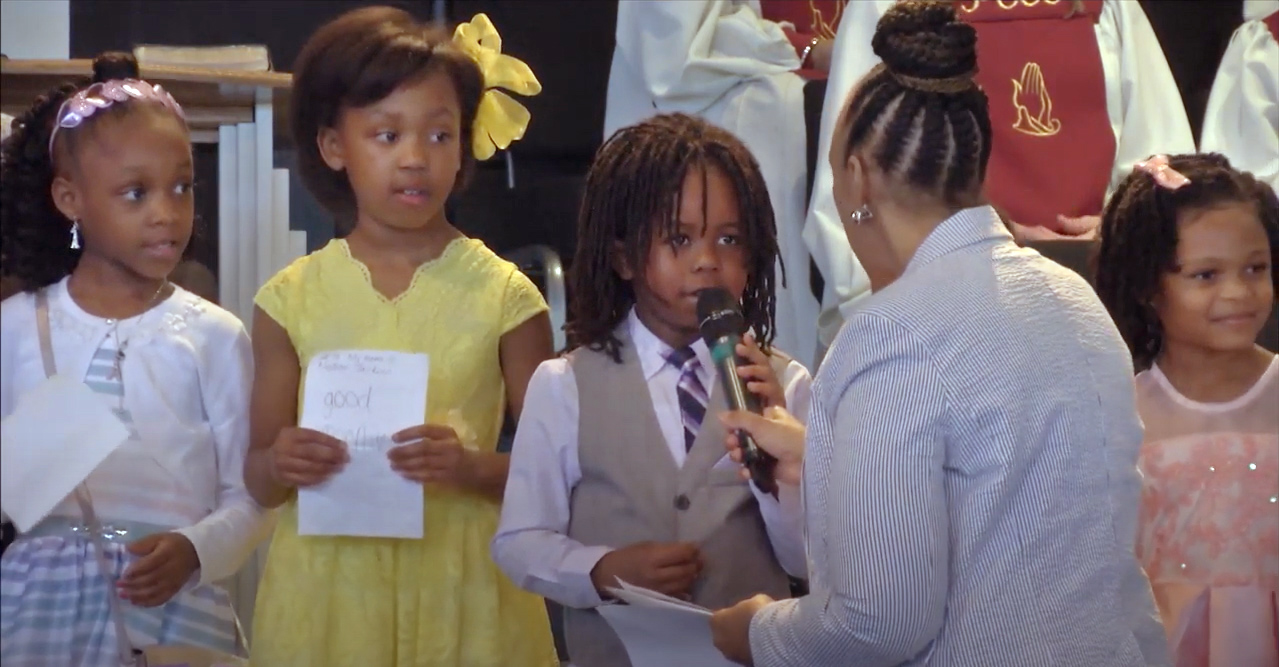
These brief performances are typically assigned by a Sunday school teacher or church director. Some very small child inevitably forgets his or her lines — or just a single line — after weeks of drilling and rehearsal at home or church. There may be tears and dresses with flounces. But there’s always a congregation that’s willing to feed the young orator that forgotten line and applaud every effort.
The Easter speech is both lesson and African American liturgy, often with a church-specific set of rituals, texts and practices. In the varied milieu that is the Black church — particularly smaller, rural or Southern congregations — it has long inculcated youth with the religious ABCs and introduced them to community, a debut of sorts.
“It’s a ritual that builds community efficacy and connection,” Brooks said. “Even conservatives will acknowledge high levels of alienation and disconnectivity and the loss of communal institutions in this country. But this communicates to you as a child, ‘You can have a platform, too.’ Your voice is literally affirmed in that moment.”
While few children who recite their Easter speeches will go on to become clergy as Palmer did, it’s an all-purpose exercise in leadership and the profession of faith, as well as an informal progress report on children’s development — even if the public aspect of it makes many youngsters quake with annual trepidation.
Who are the nonclergy leaders in your church who make a difference in the lives of others? How does your church acknowledge their contributions?
Command performances
Palmer, 41, sees and hears Easter speeches less and less these days. His congregation, about 70 regular and mostly older members, has few youngsters and doesn’t follow this practice; his son is the only regular attendee under the age of 10.
Still, Palmer misses these literal command performances with the passion of a man who as a small boy would turn his passages into theater.
Aging parishioners, declining religiosity among younger people and overall dwindling church membership (though Black Americans are the most likely of any U.S. racial group to attend church regularly, according to the Pew Research Center) may play a role in the perception that the Easter speech has become an artifact, and further ground has been lost with the growth of megachurches, where “children’s church” often separates worshippers by age.
While Easter speeches aren’t solely a feature of African American congregations, Palmer believes that newer, often multiracial worship spaces are much more likely not to keep this tradition alive. He argues that an apparent overall decline in Easter speeches is doubly troubling when arts and cultural programming that give children the opportunity to be literarily creative are also decreasing.
UMBC’s Brooks agreed, saying today’s youngsters may be pushed toward rote learning for standardized testing, affording fewer opportunities for them to flex creative memory. Brain-powered public presentations have lost out in the age of PowerPoint and other technological assists.
The COVID-19 pandemic, which shut down in-person services in many churches, has also wiped out the practice in some congregations, though others did move it online. And there is also a logistical challenge: in congregations with a large juvenile population, a full slate of Easter speeches makes that holiday service — frequently lengthened by communion and an additional sunrise service — even longer.
What are some traditions that your faith community is resuming post-pandemic, and what are some you will let go?
On the stage
While many Christian communities may opt out of Easter speeches, in those that do provide the opportunity, rarely has participation been optional. Courtney Thomas, a 28-year-old “P.K.” (preacher’s kid) and nonprofit communications professional from Columbia, South Carolina, grew up in a Missionary Baptist church.
Her father also directed Christian education for a denominational association. What’s more, her mother was part of a Toastmasters public-speaking group at work. That meant Thomas was always going to be on the stage.
“I learned how to read, basically, in Sunday school. We did Black history speeches, and we would roll almost immediately into preparation for Easter,” she said.
“Because I grew up in the family I grew up in, we practiced way more than [my peers’ families]. I remember distinctly when my entire family — four of us — would sit on the couch and my mom would drill us on our speeches,” divvying up lengthier pieces on index cards.
Decades later, Thomas can recite one Easter speech on the spot and not miss a beat. She can’t remember when she gave her first one but thinks it was likely before kindergarten; she stopped around age 12 because, newly adolescent, she had decided that Easter speeches were “for babies.”
“You’d see kids as young as 3, still working on trying to make actual words. The younger the kid is that does an Easter speech, the bigger deal it is,” she said.
“You’d call out their name, and that child would take the mic and say, ‘Happy Easter!’ and then curtsy. I didn’t want to curtsy or be in front of the church. Maybe it’s a literacy thing, but the more cynical part of me thinks it’s also about performance and keeping up with the Joneses and using your children to show, ‘My kids aren’t out in street.’”
Palmer also noted, laughing, the scripted and compulsory elements of the Easter speech. One day in the early 1990s, the golden age of hip-hop, a friend tried to rap his contribution — an innovation that wasn’t received well in a church that hadn’t updated its Easter program in some time.
And if an adult “came to church twice and [other congregation members] thought that you might show up on Easter Sunday and you had children, the Sunday school teacher was calling your house or your grandmother’s house or your auntie’s house” to sign up your youngsters for a brief say on Easter Sunday, Palmer said.
Retired educator and librarian Eve Francois directs Christian programming at Christian Unity Baptist Church in New Orleans. She’s run Sunday schools, invited children to her house for Easter egg dying and tea parties, and assigned those Easter speeches. Now in her 70s, she performed her own Easter speeches in her small hometown of Rayville in northeast Louisiana.
“We only got new shoes like maybe twice a year, but Easter was one of those times,” she said. “From the time that I was 3, I grew up reciting poems. That was just part of our upbringing. And what was wonderful about the Easter speech was that even if you messed up, you were in a nurturing environment. No one laughed at you. They would just encourage you: ‘Go on, baby. You could do it, baby.’”
Are there liturgical or formation traditions in your church that would be considered too institutionally sacred for innovation?
Ability and motivation
Using her educator’s eye, Francois said that the art of the Easter speech lies in tailoring passages to a child’s abilities and motivation.
“If a child was reluctant or had difficulty learning their part, there was a little poem I used to use that went something like this: ‘Why are you looking at me so hard? I don’t have much to say. I just came to tell you that today is Easter day.’”
New Orleans-based poet Kelly Harris-DeBerry also attends Christian Unity, and her 9-year-old daughter, Naomi, will recite her Easter speech this month under Francois’ direction. It will be the first time since spring 2019 that the church will have in-person Easter speeches and a parade.
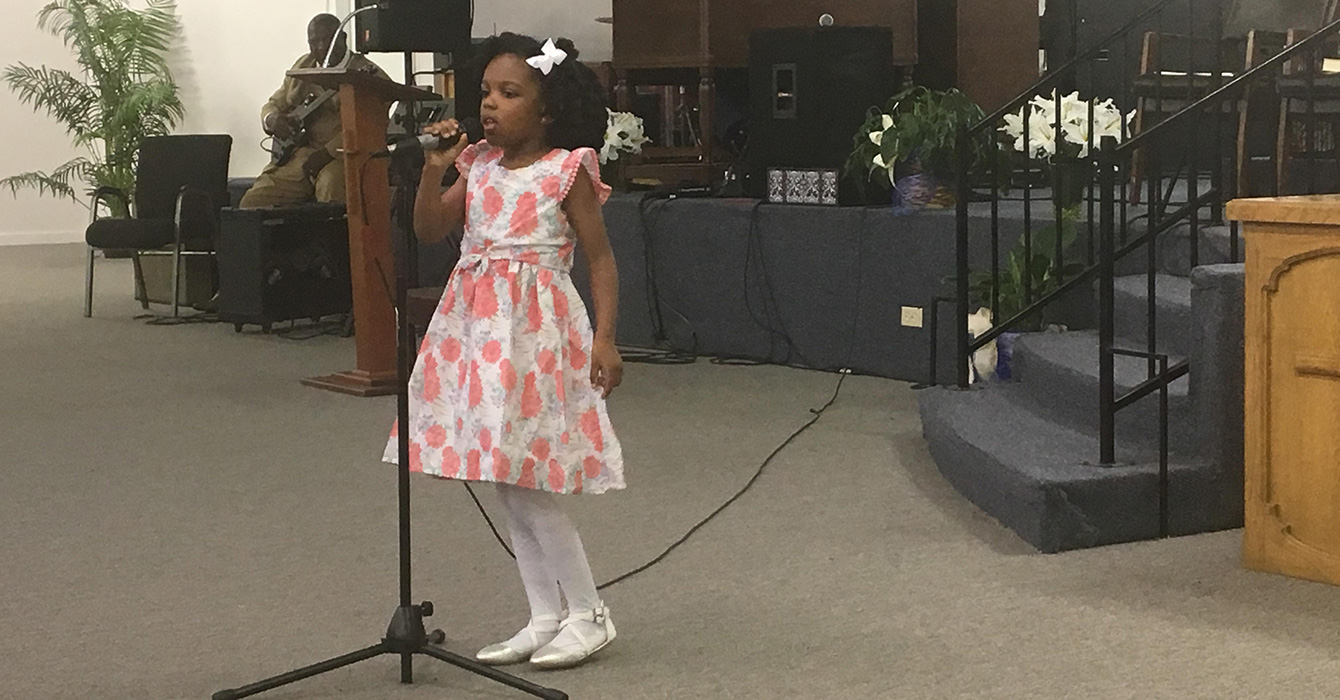
Naomi has long since outgrown her Easter dress from that year.
Performing an Easter speech “is very exciting for me this year in particular, because I haven’t been able to do an Easter speech since I was 6,” Naomi said. “I guess I did not understand all the way back then, but I feel I can have more of a brave and bold Easter speech [this year].”
She has the elements of the Easter speech down pat: introducing herself, welcoming the congregation with a shoutout, delivering a short religious homily with confidence. And before all that happens, pulling together a look befitting the occasion. “Girls in particular have to get their hair done the night before, dress, tights, hat, and it’s kind of fun to pick out those things,” she said.
Naomi’s mother especially cherishes the women like Francois — often legendary long-term Sunday school superintendents — tutoring girls like her daughter now, and herself decades ago.
“I think back on all those Easter speeches, and even currently in my community of faith, there was always a presence of a Black woman educator somewhere. They were embedded inside of church, like pre-speech or debate teams, teaching the building blocks we needed about communication and presentation,” Harris-DeBerry said.
Growing up denominationally in the Church of God in Christ, she said, she’d receive her annual Easter assignment on a tiny slip of paper early on. That paper got larger and larger as she grew older, and her mother would fold it carefully and stash it in her purse.
What practices from your church connect people across generations? What are the activities everyone remembers years later?
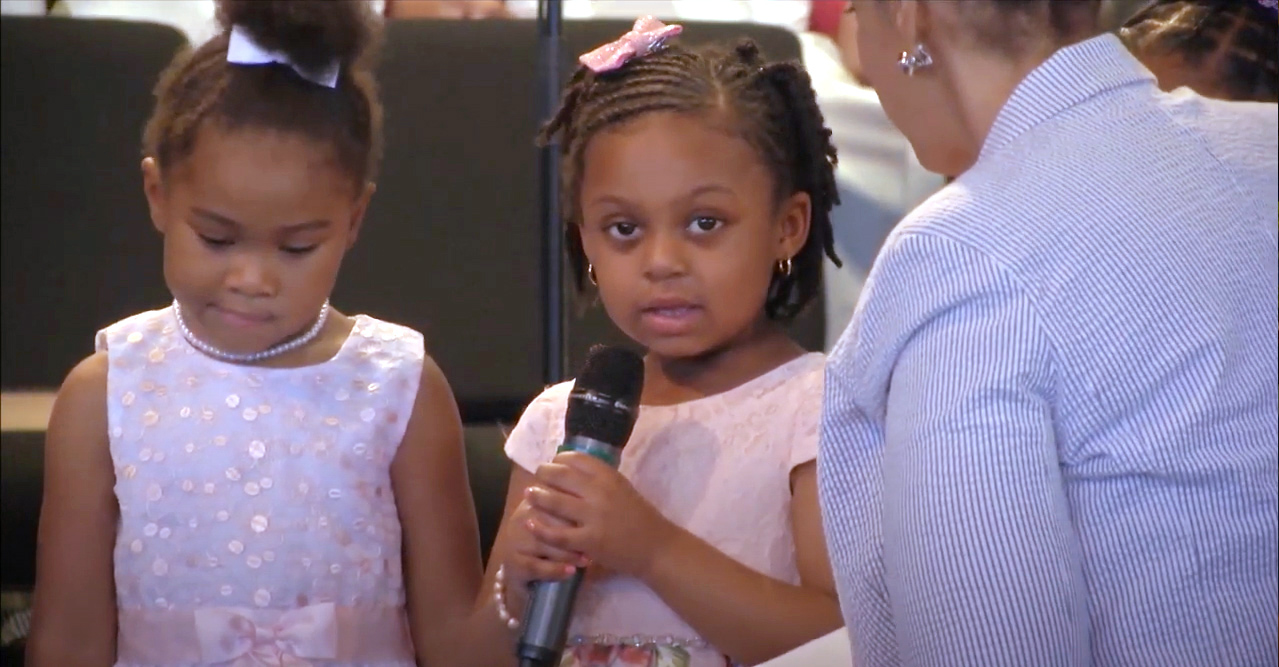
“My parents were serious about it. I would practice in the living room, and my dad would give me a brush and a comb to hold [like the mic]. He’d say, ‘Hold it up to your mouth.’ ‘Speak up.’
“My mom would be cooking in the kitchen, and she’d say, ‘Start your speech,’ just randomly, and give me the first line. … And my dad wasn’t just satisfied with me doing [a simple] Easter speech. He was like, ‘You’re going to do an Easter speech and name all the 12 disciples.’ It was about Black excellence.
“I think it was the precursor for me being a poet, because there’s a certain way, even now, I hold the mic. If I’m in front of a podium, there’s a certain way that I check the sound of my voice. I don’t need a sound guy to adjust my voice; I can almost hear it. All that comes from being in the church and Easter speeches. It began with the brush and the comb.”
Questions to consider
- How has faith formation from your childhood influenced your life outside church settings?
- Who are the nonclergy leaders in your church who make a difference in the lives of others? How does your church acknowledge their contributions?
- What are some traditions that your faith community is resuming post-pandemic, and what are some you will let go?
- Are there liturgical or formation traditions in your church that would be considered too institutionally sacred for innovation?
- What practices from your church connect people across generations? What are the activities everyone remembers years later?